Autumn is coming, and with it the return of trail runs in cooler weather. Many runners let their hydration vigilance slip as temperatures drop, telling themselves they sweat less. This is a common mistake that can be costly in terms of fatigue and performance. Here’s how to adapt your hydration when the thermometer drops.
Why you also get dehydrated in winter
The deceptive feeling of thirst in cold weather
The cold naturally reduces your feeling of thirst, even though your body continues to lose water. The mechanism that makes you want to drink in hot weather is triggered much later in winter, meaning you can build up a fluid deficit without even realizing it during your run.
Invisible fluid losses in the cold
In cold, dry weather, you lose a significant amount of water simply by breathing, because cold air forces your airways to humidify every breath. On top of this, you sweat beneath your layers of technical clothing, which is often harder to notice than in summer, when sweat visibly runs down your body.
How much to drink during a winter trail run
The basic guideline per hour of exercise
In winter, the general target is between 400 and 500 ml per hour of exercise, slightly less than the 500 to 700 ml recommended in hot weather. The idea isn’t to drink less as a rule, but to adapt the amount to actual losses that are still present, just less dramatic than in summer.
Adjusting according to duration and intensity
For a short run of less than an hour, water alone is more than enough. Beyond an hour and a half, especially on a hilly trail where intensity varies considerably, it becomes useful to add electrolytes to replace lost sodium and prevent muscle fatigue toward the end of the route.
The amount to target depends mainly on the distance. We’ve provided guidelines in our article on how much to drink according to your distance.
Which drink to choose in cold weather
A lukewarm drink rather than an iced one
A cold drink is less pleasant to drink in below-freezing temperatures and may even reduce your desire to hydrate regularly. Many experienced trail runners prepare a lukewarm drink before setting out, which encourages them to take small sips throughout the effort rather than drinking a large amount at once.
The role of electrolytes in the cold
Sodium, magnesium and potassium remain essential even in cold weather, because they continue to be lost through sweat and breathing. An electrolyte-enriched drink helps maintain fluid balance and reduces the risk of cramps, a common issue on hilly trails at the end of the year. Our electrolyte sticks, with potassium, magnesium and sea salt, can be prepared in just a few seconds before heading out for a run.
Equipment to avoid being caught out by freezing temperatures
Insulated bottle and thermal cover
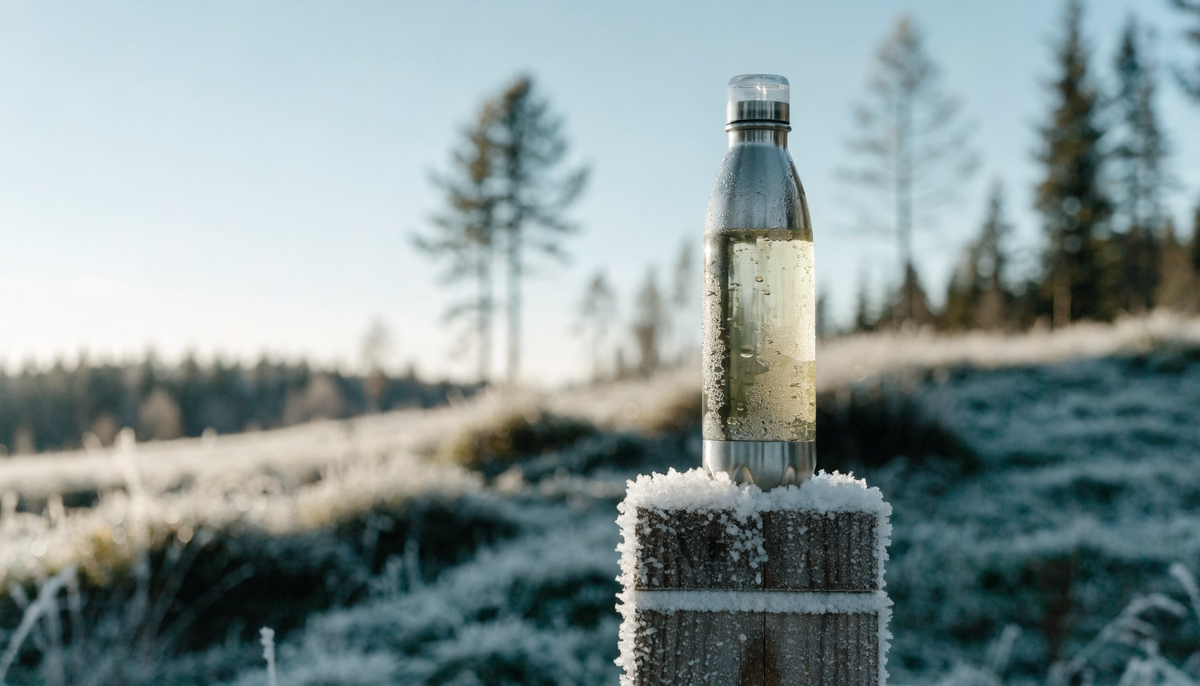
An insulated bottle, or failing that, a thermal cover around a regular bottle, helps keep your drink at a pleasant temperature for longer. It’s a detail that makes a big difference on outings lasting more than two hours, when the liquid would otherwise have time to cool completely.
Hydration bladder and freeze prevention
If you use a hydration bladder, the hose is the first part to freeze in below-freezing temperatures. Blow air into it after each sip to push the water back toward the bladder and reduce the risk of a blockage. Some trail runners actually prefer returning to traditional soft bottles as soon as the mercury drops below zero, since they’re easier to thaw along the way.
To find out your actual losses rather than relying on an average, the weigh-in test is simple to perform. We explain it in our article on sweat rate.
Recognizing the signs of dehydration in winter
Signals that are less obvious than in summer
In summer, intense thirst and heavy sweating provide a natural warning. In winter, the signs are subtler, making them even easier to ignore during a run. A dry mouth, headaches at the end of the route, fatigue that arrives earlier than usual or urine that is darker than normal are all signs that your hydration hasn’t kept pace with your effort.
Why it’s better to anticipate than react
On a trail run, correcting a fluid deficit along the way is always harder than avoiding it from the start, especially when the trail becomes technical or darkness falls earlier this season. The simplest approach is to schedule regular intake, for example every twenty minutes, rather than waiting for a signal from your body that often comes too late in winter.
Mistakes to avoid before setting out
Setting off without drinking beforehand
Many runners only think about hydrating once they’re on the trail, even though what you do before setting out is just as important. Drinking a glass of water in the hour before your run, and perhaps a small dose of electrolytes if you’re heading out for more than two hours, puts you in much better condition from the first few miles. This is especially true in winter, when the spontaneous urge to drink is rare.
Neglecting the food that accompanies hydration
Hydration doesn’t work in isolation; it goes hand in hand with what you eat before and during exercise. In cold weather, your body burns more energy to maintain its temperature, which also increases your sodium needs. A small salty snack before setting out, combined with an electrolyte drink during exercise, limits cramps much more effectively than drinking plain water alone.
After a run in cold weather, recovery follows the same principles as in summer. We’ve brought them together in our article on what to drink after exercise.
FAQ: your questions about hydration during winter trail runs
Why are we less thirsty when it’s cold?
The cold constricts blood vessels in the extremities and alters the brain’s perception of thirst. Your body nevertheless continues to lose water through breathing and sweating, which is why it’s important to drink at regular intervals even when you don’t feel like it.
Should you drink a hot beverage during a winter trail run?
It isn’t mandatory, but a lukewarm drink is often more pleasant than an iced one and encourages more regular drinking. Some runners carry a small thermos for very long or very cold outings.
How can you prevent water from freezing in your bottle?
Use an insulated bottle or a thermal cover, and keep the bottle or hydration bladder against your body rather than on the outside of your pack whenever possible. For hydration bladders, blowing into the hose after each sip helps limit freezing.
How much should you drink per hour on a winter trail run?
Allow approximately 400 to 500 ml per hour of exercise in cold conditions, adjusting this according to your build, pace and the difficulty of the terrain.
Are electrolytes really useful in winter?
Yes, your body continues to lose sodium, magnesium and potassium through sweat even when it’s cold. On long outings, an electrolyte-enriched drink helps reduce fatigue and cramps toward the end of the route.
Our electrolyte sticks dissolve just as well in lukewarm water as in cold water, which is helpful when the bottle is at risk of freezing. Their composition is published and compared on drinkscore.info.
In summary
Winter doesn’t put your hydration on hold; it simply changes how you need to manage it. Drink regularly even when you aren’t thirsty, choose a lukewarm drink, consider electrolytes on long outings and protect your equipment from freezing. These small preparation details, much more than the cold itself, are often what make the difference between a difficult outing and one you finish feeling strong. With these habits in mind, your autumn and winter trail runs will go much more smoothly, mile after mile.